How Your Environment and Personal Training Can Improve Mental Health

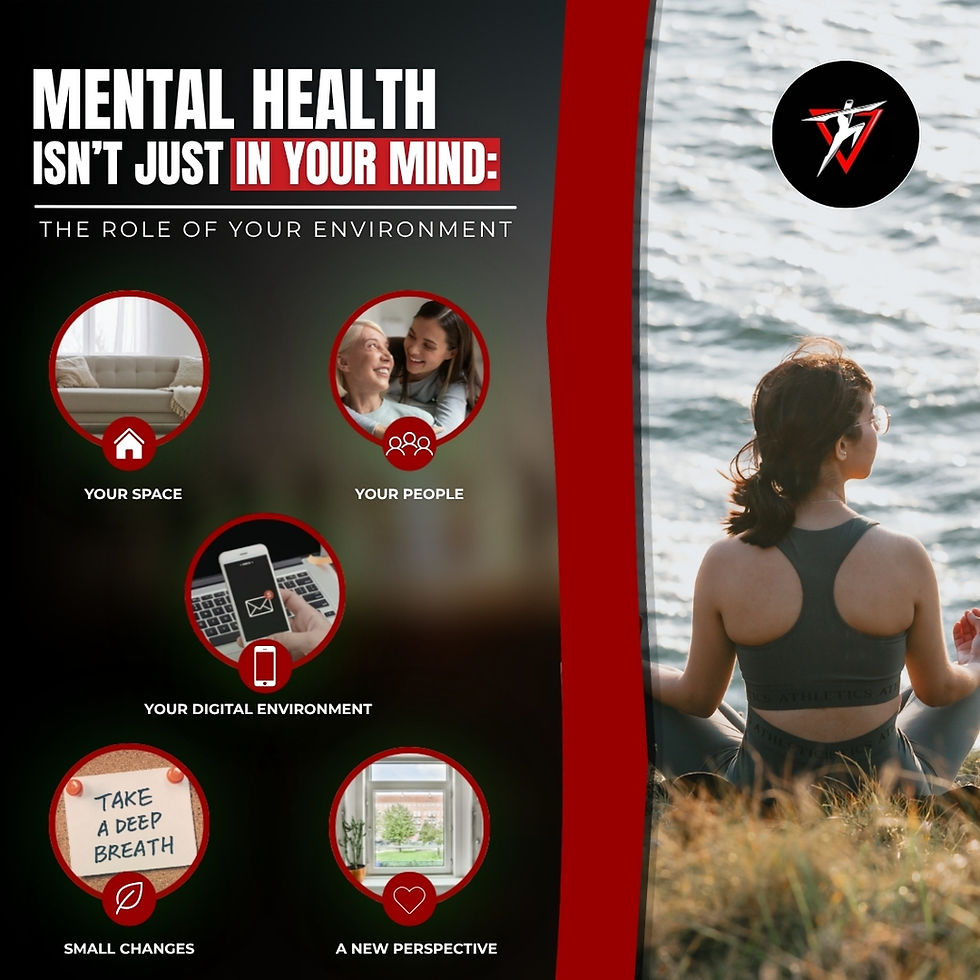
When we talk about mental health, we often focus on what is happening internally: thoughts, emotions, stress, motivation, and mindset. While these are important, mental well-being is also shaped by something we experience every day: our environment.
Your surroundings can either support your mental health or quietly drain it. The space you live in, the people around you, your daily routine, your digital habits, and even how much you move your body all influence how you feel.
This is where personal training becomes more than just exercise. A good fitness routine can help create structure, reduce stress, build confidence, and support a healthier mental environment.
Why Your Environment Matters for Mental Health
Your environment affects your nervous system more than you may realize. A cluttered room, constant noise, poor lighting, or endless phone notifications can make your brain feel overloaded. Research has linked environmental stressors such as noise and overstimulation with poorer mental health outcomes. (Nature)
On the other hand, a calm and organized space can help you feel more focused and grounded. Spending time in natural environments has also been associated with improved mood, reduced stress, and better cognitive function. (ScienceDirect)
This does not mean your home, gym, or workspace needs to look perfect. It simply means that small, intentional changes can make a real difference.
Opening a window, clearing your training area, preparing your workout clothes, or setting your phone aside before exercise can help signal to your mind that it is time to reset.
The Link Between Exercise and Mental Health
Personal training is often seen as a way to lose weight, build muscle, or improve physical strength. But movement also has powerful mental health benefits.
The World Health Organization states that regular physical activity can reduce symptoms of depression and anxiety, support brain health, and improve overall well-being. (World Health Organization) The CDC also notes that physical activity can help with thinking, learning, problem-solving, emotional balance, memory, anxiety, and depression. (CDC)
This is one reason personal training can be so helpful. It gives you structure when life feels chaotic. It gives you goals when motivation feels low. It gives you a safe space to focus on what your body can do, not just what your mind is struggling with.
How Personal Training Creates a Healthier Mental Environment
A personal trainer does more than guide workouts. The right trainer helps create an environment that supports progress, consistency, and self-trust.
For many people, mental health struggles can make it hard to start exercising alone. Anxiety, low energy, negative self-talk, or feeling intimidated at the gym can become barriers. A trainer can help reduce those barriers by offering guidance, accountability, encouragement, and a plan that feels realistic.
Research supports exercise as a helpful tool for improving symptoms of depression, anxiety, and distress across different adult populations. (British Journal of Sports Medicine) Both aerobic exercise and resistance training have also been studied for their mental health benefits, including improvements in depression, self-esteem, and overall well-being. (PMC)
In simple terms, training can help you feel stronger physically and mentally.
Your Physical Space Can Affect Your Workout Mindset
Your workout environment matters. If your space feels stressful, crowded, or overwhelming, it may be harder to stay consistent. But if your space feels welcoming and manageable, exercise becomes easier to approach.
This could mean:
Creating a small workout corner at home, keeping your gym bag ready, choosing a gym where you feel comfortable, training with someone who makes you feel supported playing music that helps you focus, and reducing phone distractions during workouts
These small changes help your brain associate exercise with safety, progress, and self-care instead of pressure or punishment.
The Social Side of Fitness and Mental Health
The people around you also influence your mental health. Supportive relationships can help you feel seen, encouraged, and motivated. Negative or judgmental environments can do the opposite.
Personal training can offer a positive social connection, especially for people who feel isolated or unsure where to begin. Having someone check in, celebrate progress, and adjust your plan when life gets difficult can make fitness feel less lonely.
Group training, gym communities, and wellness programs can also support mental health by creating connection and accountability.
Your Digital Environment Matters Too
Mental health is not only affected by physical spaces. Your digital environment also plays a role.
Fitness content online can be inspiring, but it can also lead to comparison, pressure, and unrealistic expectations. Seeing “perfect” bodies, extreme routines, or quick transformation posts can make people feel like they are already behind.
A healthier digital environment means choosing content that motivates without shaming you. Follow trainers, wellness pages, and mental health voices that promote realistic progress, balanced routines, and body respect.
Fitness Is Not About Fixing Yourself
Improving mental health through personal training is not about “fixing” who you are. It is about creating conditions that help you feel better, move better, and live with more confidence.
Sometimes the most powerful question is not, “What is wrong with me?”
It is, “What can I adjust around me to support myself better?”
That might mean changing your space. It might mean starting a simple workout routine. It might mean working with a personal trainer who understands your goals and your mental health needs.
Small Steps That Can Help
You do not need to change your whole life overnight. Start with simple steps:
Clear one area where you can stretch or exercise. Take a 10-minute walk outside. Schedule one training session per week. Set boundaries with your phone before bed. Choose supportive people to share your goals with. Track how exercise affects your mood, not just your weight
Progress does not have to be extreme to be meaningful.
Final Thoughts
Your mental health is shaped by more than your thoughts. It is also shaped by your environment, your routine, your relationships, and the way you care for your body.
Personal training can be a powerful part of that support system. It helps create structure, builds confidence, improves physical health, and gives your mind a healthier place to land.
Sometimes, improving your mental health starts with changing what is around you.
And sometimes, it starts with moving your body one small step at a time.
At SoFit SoCal Arcadia, personal training goes beyond workouts and weight loss. The goal is to help you build sustainable habits, reduce stress, improve confidence, and create a healthier lifestyle that supports both your body and your mind.
Whether you are just starting your fitness journey, rebuilding consistency, managing stress, or looking for a more supportive and personalized approach to wellness, the team at SoFit SoCal Arcadia is here to help you every step of the way.
Their trainers understand that fitness is not one-size-fits-all. Every person comes in with different goals, energy levels, schedules, and challenges. That’s why personalized training programs are designed to meet you where you are while helping you move toward long-term progress physically and mentally.


Comments